
Spanish Pronunciation Tips for English Speakers: Sound Natural Fast
Struggling to sound natural when speaking Spanish? These pronunciation tips for English speakers will help you master the accent and build confidence quickly.
Ivette Pérez Téllez
8/17/20252 min read

Introduction
Spanish pronunciation can seem tricky at first — those rolling R’s, crisp vowels, and musical flow! But don’t worry — Spanish is one of the most phonetically consistent languages in the world. Once you understand a few core pronunciation rules, you’ll sound more natural, confident, and clear in no time.
Here are seven practical tips to help English speakers improve their Spanish pronunciation and speak with ease.
1. Focus on the Five Pure Vowels
Unlike English, which has over a dozen vowel sounds, Spanish has only five — and each one is consistent.
A = “ah” (as in father)
E = “eh” (as in met)
I = “ee” (as in see)
O = “oh” (as in go)
U = “oo” (as in moon)
Keep them short and clean — no diphthongs like in English. Try: casa, leche, amigo, solo, luna.
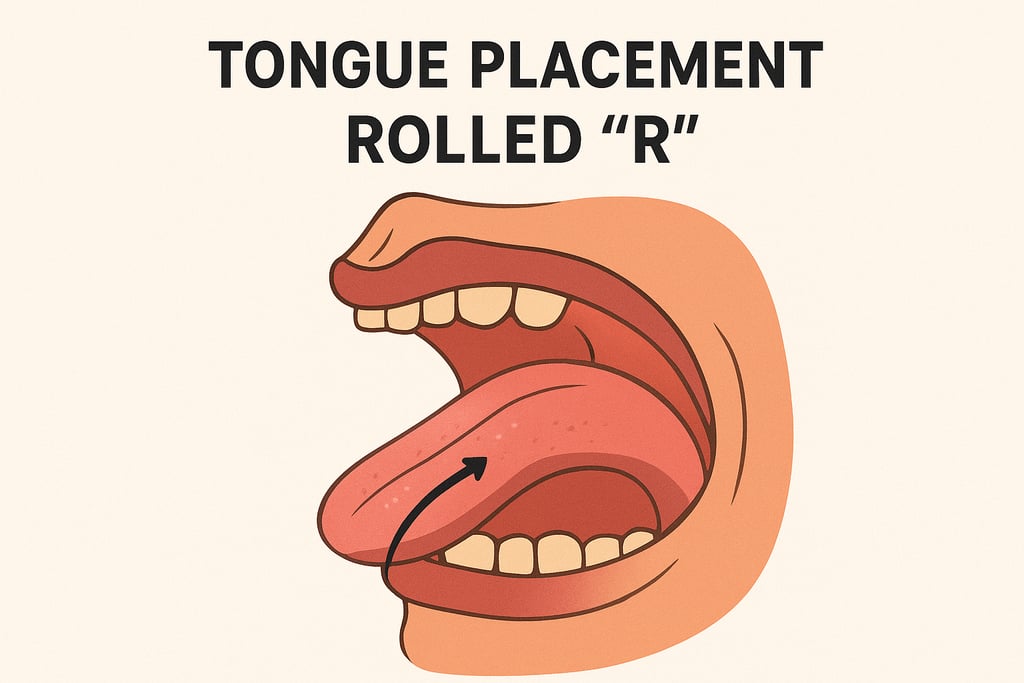
2. Practice the Spanish “R” — Step by Step
The rolled R (perro) can be intimidating, so start with the soft R (pero). Practice by saying ladro or patra — your tongue will naturally learn to vibrate.
If you can’t roll it yet, don’t stress! Focus on the rhythm and airflow; it’ll come with time.
3. Understand Word Stress and Accents
Spanish rhythm comes from predictable stress patterns:
Most words stress the second-to-last syllable: casa, bonito, amigo.
If a word has an accent mark, stress that syllable: café, camión, inglés.
Getting stress right will instantly make your Spanish sound more natural.
4. Pronounce Every Letter (Almost!)
Spanish spelling is phonetic — every letter counts! A few key notes:
H is silent → hola = “ola”
J = harsh “h” → jamón = “ham-ON”
LL and Y sound like English “y” → lluvia, yo
Avoid skipping sounds — Spanish flows smoothly when every syllable is pronounced clearly.
5. “B” and “V” Sound the Same
Spanish b and v share a gentle sound — somewhere between English “b” and “v.” Your lips should lightly touch, not press.
Try saying bebé, vivir, bueno slowly to feel the softness.
6. Use Softer “D” and “T” Sounds
Spanish d and t are lighter — your tongue touches your upper teeth, not the roof of your mouth.
Say todo and tarde softly; it should feel smoother than English “t” or “d.”
7. Listen, Repeat, Record
To truly master pronunciation, immerse yourself. Listen to Spanish songs, movies, or YouTube clips — and mimic what you hear.
Record yourself speaking, compare it to a native, and note small changes. Over time, these tiny adjustments make a big difference!
Final Thoughts
Pronunciation isn’t just about accuracy — it’s about confidence and connection. With consistent practice, your Spanish will sound smoother, more natural, and more authentically you.
Be patient, enjoy the process, and celebrate every “R” that rolls! 🎤
Follow me
Join me to learn Spanish with ease
Contact
support@speakspanishglobal.com
+52 222 188 0049
© 2025. All rights reserved - www.speakspanishglobal.com