
🚫 Top 10 Mistakes English Speakers Make in Spanish (and How to Fix Them)
Avoid the most common Spanish mistakes English speakers make. Simple examples and fixes to help you sound more fluent and natural fast.
Ivette Pérez Téllez
8/10/20252 min read
Introduction
Every Spanish learner makes mistakes — it’s part of the process! 🌱
As an English speaker, you’ll notice some patterns in the types of errors that come up again and again. The good news? Once you’re aware of them, they’re easy to fix.
Let’s look at the 10 most common mistakes English speakers make in Spanish and how you can avoid them.
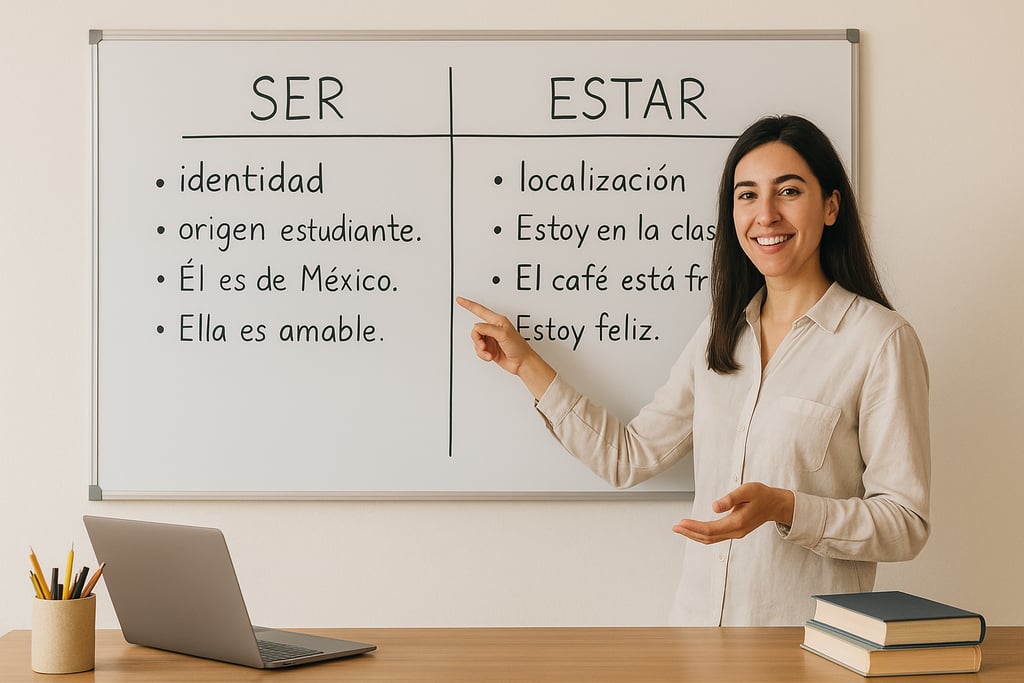
1. Mixing Up “Ser” and “Estar”
Both mean to be, but they’re used differently.
Ser → permanent qualities (Soy mexicana — I’m Mexican)
Estar → temporary states (Estoy cansado — I’m tired)
👉 Tip: Use ser for “who you are” and estar for “how you are.”
2. Forgetting Gender Agreement
Every noun in Spanish has a gender — masculine or feminine — and adjectives must match.
El coche rojo (masculine)
La casa roja (feminine)
👉 Tip: Pay attention to -o / -a endings, and practice consistency!
3. Literal Translations from English
Expressions like “I’m hot” can’t be translated word-for-word.
❌ Estoy caliente (wrong — it can sound inappropriate!)
✅ Tengo calor (I feel hot).
👉 Tip: Learn common Spanish phrases instead of translating literally.
4. Using “Por” and “Para” Incorrectly
Both mean for, but with nuance:
Por → cause, duration (Gracias por tu ayuda — thanks for your help)
Para → purpose, goal (Es un regalo para ti — it’s a gift for you)
5. Rolling the “R”
Many English speakers struggle with the Spanish r.
👉 Tip: Start with words like perro (dog) and carro (car), and practice tapping your tongue against the roof of your mouth.
6. Forgetting Accent Marks
Accent marks can change meaning!
Sí (yes) vs. si (if)
Tú (you) vs. tu (your)
👉 Tip: Don’t ignore them — they guide pronunciation and meaning.
7. False Friends (“Falsos Amigos”)
Words that look similar in English and Spanish but mean different things:
Embarazada ≠ embarrassed (it means pregnant)
Actual ≠ actual (it means current/present)
👉 Tip: When in doubt, check a dictionary before assuming.
8. Overusing “Muy” Instead of “Mucho”
Muy modifies adjectives/adverbs → muy bonito (very pretty)
Mucho modifies nouns/verbs → mucho dinero (a lot of money), llueve mucho (it rains a lot)
9. Mispronouncing Vowels
Spanish vowels are short and clear — no diphthongs like in English.
A = “ah”, E = “eh”, I = “ee”, O = “oh”, U = “oo”
👉 Tip: Exaggerate them at first — clarity matters more than speed!
10. Speaking Too Fast (or Too Shy!)
Many beginners rush to sound fluent or hesitate to speak at all.
👉 Tip: Speak slowly and clearly. Fluency comes from confidence, not speed.
🌟 Final Thoughts
Mistakes are part of every learner’s journey — even native speakers make them! What matters is noticing them, learning from them, and staying consistent.
Every error is proof that you’re practicing, and that’s the most important step of all. 💪
Follow me
Join me to learn Spanish with ease
Contact
support@speakspanishglobal.com
+52 222 188 0049
© 2025. All rights reserved - www.speakspanishglobal.com