
📝 Spanish Verbs & Tenses Made Easy
Struggle with Spanish verbs? Learn the secret to mastering tenses and conjugations with simple patterns and real-life examples.
Ivette Pérez Téllez
8/24/20252 min read
Introduction
If there’s one thing that makes many Spanish learners sweat, it’s verbs — and especially, tenses! But here’s some good news: Spanish verbs follow clear, logical patterns. Once you understand how they work, everything else becomes much easier.
In this article, you’ll learn the essentials of Spanish verbs and tenses — how they’re structured, what the main tenses mean, and how to start using them confidently in conversation.
1. Understanding Spanish Verbs
In Spanish, verbs are action words — like hablar (to speak), comer (to eat), or vivir (to live).
Unlike English, Spanish verbs change their endings depending on who is doing the action and when it happens.
There are three main types of verbs:
-ar verbs: hablar, estudiar, bailar
-er verbs: comer, aprender, leer
-ir verbs: vivir, escribir, abrir
Each group has its own pattern of endings, which makes learning much easier once you spot them!
2. The Present Tense: El Presente
This tense is used to talk about things happening now or in general.
👉 Pro tip: The subject (yo, tú, él, etc.) can often be dropped because the verb ending already shows who is doing the action.
For example, Hablo español = “I speak Spanish” — no need to say Yo hablo unless you want to emphasize I.
3. The Past Tenses: El Pretérito y el Imperfecto
Spanish has two main past tenses — and they each tell a slightly different story.
🕒 Pretérito (Simple Past)
Used for completed actions in the past.
Ayer estudié español.
Yesterday I studied Spanish.
🕰️ Imperfecto (Imperfect Past)
Used for ongoing or repeated actions in the past.
Cuando era niño, hablaba con mi abuela todos los días.
When I was a child, I used to talk with my grandmother every day.
💡 Think of the pretérito as a snapshot — one moment in time. The imperfecto is more like a video — continuous or habitual actions.
4. The Future Tense: El Futuro
Talking about the future in Spanish is beautifully simple!
You can use the ir + a + infinitive form:
Voy a estudiar español mañana.
I’m going to study Spanish tomorrow.
Or use the simple future:
Estudiaré español mañana.
I will study Spanish tomorrow.
Both are correct — but the first one (ir a + infinitive) is more common in daily conversation.
5. How to Practice Verbs Effectively
✅ Start with regular verbs.
Focus on -ar, -er, and -ir endings before tackling irregulars.
✅ Make flashcards.
Write hablar – yo hablo, tú hablas... and test yourself.
✅ Use apps and conversation.
Apps like Quizlet or chatting with a tutor helps you remember through real examples.
✅ Don’t memorize — connect.
Instead of studying endless lists, use verbs in context:
Cada mañana tomo café.
Every morning I drink coffee.
This approach makes Spanish come alive.
6. Common Mistakes to Avoid
🚫 Mixing tenses too early.
Focus on one tense until it feels natural.
🚫 Translating word-for-word from English.
Spanish verbs often carry more information in a single word than English does.
🚫 Ignoring irregular verbs.
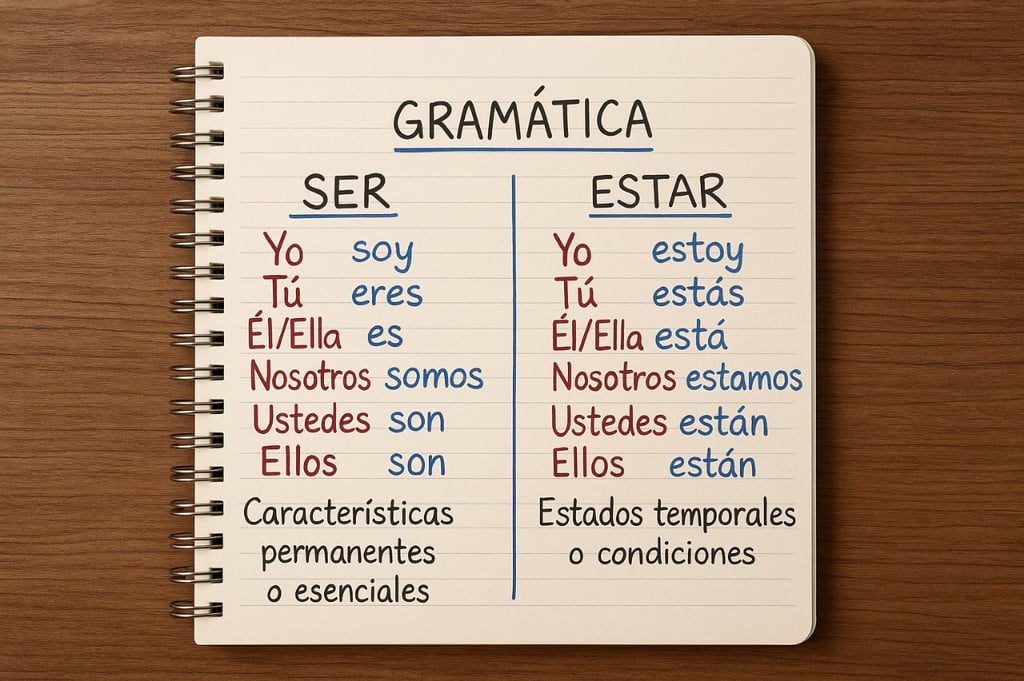
Learn the most common ones — like ser, estar, tener, ir, and hacer — early on. They appear everywhere!
Conclusion
Mastering Spanish verbs and tenses doesn’t have to be complicated.
Once you understand the logic behind conjugations, you’ll start to see patterns and gain confidence quickly.
Remember — it’s not about perfection, it’s about progress.
Use verbs every day, even in simple sentences, and soon speaking Spanish will feel natural.


Follow me
Join me to learn Spanish with ease
Contact
support@speakspanishglobal.com
+52 222 188 0049
© 2025. All rights reserved - www.speakspanishglobal.com