
🧳 Spanish for Travelers: Essential Phrases to Feel Like a Local
Heading to Mexico or another Spanish-speaking country? Learn the real-life phrases that travelers use daily — from greetings and restaurant orders to polite expressions. Speak with confidence, connect with locals, and make your trip unforgettable.
Ivette Pérez Téllez
9/21/20253 min read
Introduction
You’ve booked your trip, packed your bags, and you’re ready to explore the Spanish-speaking world. But when it’s time to order food or ask for directions, you freeze — how do you say it naturally?
Don’t worry. You don’t need to be fluent to sound friendly and confident. You just need the right Spanish phrases, the ones locals actually use every day.
Here’s your go-to guide to the most essential travel phrases — plus cultural notes to help you sound like you belong there.
1. Greetings and Small Talk
First impressions matter everywhere — and in Spanish-speaking cultures, greetings are key to polite conversation.
Essential Phrases:
Hola — Hello
Buenos días — Good morning
Buenas tardes — Good afternoon
Buenas noches — Good evening / Good night
¿Cómo estás? — How are you?
Mucho gusto — Nice to meet you
¿Cómo te llamas? — What’s your name?
💡 Cultural Tip:
In Mexico and Latin America, people often greet with a smile or even a light handshake or cheek kiss. Starting a conversation with buenos días shows warmth and respect.
2. Getting Around
When traveling, knowing how to ask for directions or transport is a lifesaver.
Key Phrases:
¿Dónde está…? — Where is…?
¿Cuánto cuesta el boleto? — How much is the ticket?
¿A qué hora sale el autobús? — What time does the bus leave?
Voy al aeropuerto. — I’m going to the airport.
Necesito un taxi, por favor. — I need a taxi, please.
Example:
¿Dónde está la estación de tren?
(Where is the train station?)
💡 Cultural Tip:
In Mexico, locals might use camión for “bus,” while in Spain you’ll hear autobús. Listen to what locals say and mirror their vocabulary.
3. Ordering Food and Drinks
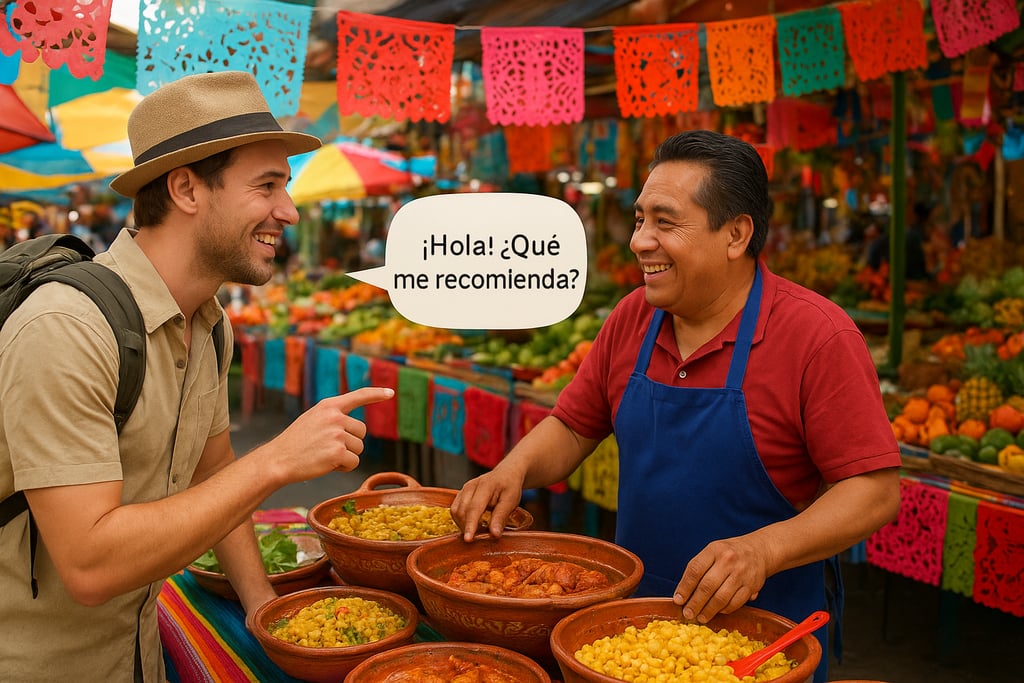
Food is one of the best parts of travel — and knowing how to order like a local makes it even better.
Useful Restaurant Phrases:
Una mesa para dos, por favor. — A table for two, please.
¿Qué me recomienda? — What do you recommend?
Quisiera… — I would like…
La cuenta, por favor. — The check, please.
Está delicioso. — It’s delicious.
Example Dialogue:
👩🦱 Mesero: ¿Qué va a pedir?
(Waiter: What will you have?)
👨💼 Tú: Quisiera unos tacos al pastor y una limonada, por favor.
(You: I’d like some tacos al pastor and a lemonade, please.)
💡 Cultural Tip:
In many Latin American restaurants, tipping (propina) is customary — around 10–15%.
4. Shopping and Money
When shopping at markets or small stores, it’s polite to greet and bargain kindly.
Key Phrases:
¿Cuánto cuesta? — How much is it?
¿Me puede dar un descuento? — Can you give me a discount?
Solo estoy mirando, gracias. — I’m just looking, thank you.
Está muy caro. — It’s very expensive.
Lo llevo. — I’ll take it.
Example:
¿Cuánto cuesta esta camiseta?
(How much does this shirt cost?)
💡 Cultural Tip:
In Mexico and Central America, markets are lively and friendly. A warm buenos días before asking prices goes a long way.
5. At the Hotel or Airbnb
Even basic Spanish can make check-in smoother.
Useful Phrases:
Tengo una reservación. — I have a reservation.
¿Dónde está el baño? — Where is the bathroom?
¿Hay desayuno incluido? — Is breakfast included?
Necesito toallas, por favor. — I need towels, please.
¿Puedo pagar con tarjeta? — Can I pay with a card?
💡 Cultural Tip:
Politeness is key. Add por favor (please) and gracias (thank you) often — it’s always appreciated.
6. Emergencies and Help
Hopefully, you won’t need these, but it’s good to be prepared.
Important Phrases:
Ayuda, por favor. — Help, please.
Llame a una ambulancia. — Call an ambulance.
Necesito un médico. — I need a doctor.
Perdí mi pasaporte. — I lost my passport.
No entiendo. — I don’t understand.
¿Habla inglés? — Do you speak English?
Example:
No entiendo. ¿Puede repetir, por favor?
(I don’t understand. Can you repeat, please?)
7. Express Yourself Like a Local
To sound more natural, sprinkle in everyday expressions that locals use.
Fun Expressions:
¡Qué padre! — How cool! (Mexico)
¡Vale! — Okay! (Spain)
¡Chévere! — Great! (Latin America)
¡No pasa nada! — It’s okay / Don’t worry.
¡Hasta luego! — See you later!
💡 Cultural Tip:
Each region has its slang — don’t stress about memorizing them all. Focus on learning what’s common where you’re traveling.
Final Thoughts
Traveling isn’t just about sightseeing — it’s about connection. When you make an effort to speak Spanish, even just a few phrases, locals notice and appreciate it.
A friendly gracias or qué rico can turn a simple transaction into a warm moment of human connection.
You don’t need to be perfect — you just need to be present and open.
Follow me
Join me to learn Spanish with ease
Contact
support@speakspanishglobal.com
+52 222 188 0049
© 2025. All rights reserved - www.speakspanishglobal.com